


Stepper Motor Drivers
Session textval
Session Titefor popup
MPS stepper motor drivers are optimized to drive bipolar stepper motors used in printers, document scanners, robots, and other office and factory automation equipment. The MPS stepper motor driver family includes both low and high voltage devices as well as parts with or without indexer or translator logic. Some MPS parts feature internal current regulation with no shunt resistors, and feature the most accurate current control in the industry, providing microstepping capability.
Stepper Motor Drivers Content
-
MPSCHOLAR
ADVANCED TOPICS AND FUTURE DEVELOPMENTSMPSCHOLARThe field of stepper motor technology is undergoing a rapid revolution, which is being pushed by advancements in the fields of materials science, manufacturing techniques, and digital technology. The performance, efficiency, and application breadth of stepper motors are all expected to improve as a result of these improvements, which will further solidify their position as an essential component o...
-
MPSCHOLAR
ADVANTAGES AND LIMITATIONSMPSCHOLARStepper motors, due to their one-of-a-kind operational features, provide a variety of benefits that make them particularly well-suited for applications that require precise control and dependability. It is the inherent design elements and operational mechanisms of these products that are responsible for these benefits. Controlling stepper motors is a straightforward process, which is one of the...
-
MPSCHOLAR

APPLICATIONS IN PRECISION POSITIONINGMPSCHOLARThe capacity of stepper motors to move in precise increments, also known as "steps," makes them an essential component in the field of precision positioning and motion control. This feature enables stepper motors to provide precise control over position, speed, and acceleration. Because of this one-of-a-kind quality, they are important in applications that call for high levels of accuracy and repr...
-
MPSCHOLAR

DESIGN AND CONTROL MECHANISMSMPSCHOLARStepper motors are characterized by their fundamental components, which include the rotor, the stator, and auxiliary features that permit precise control and movement. These components are responsible for defining structural integrity and its performance. In order to have a proper understanding of how stepper motors operate and how they are intended for particular applications, it is vital to have...
-
MPSCHOLAR
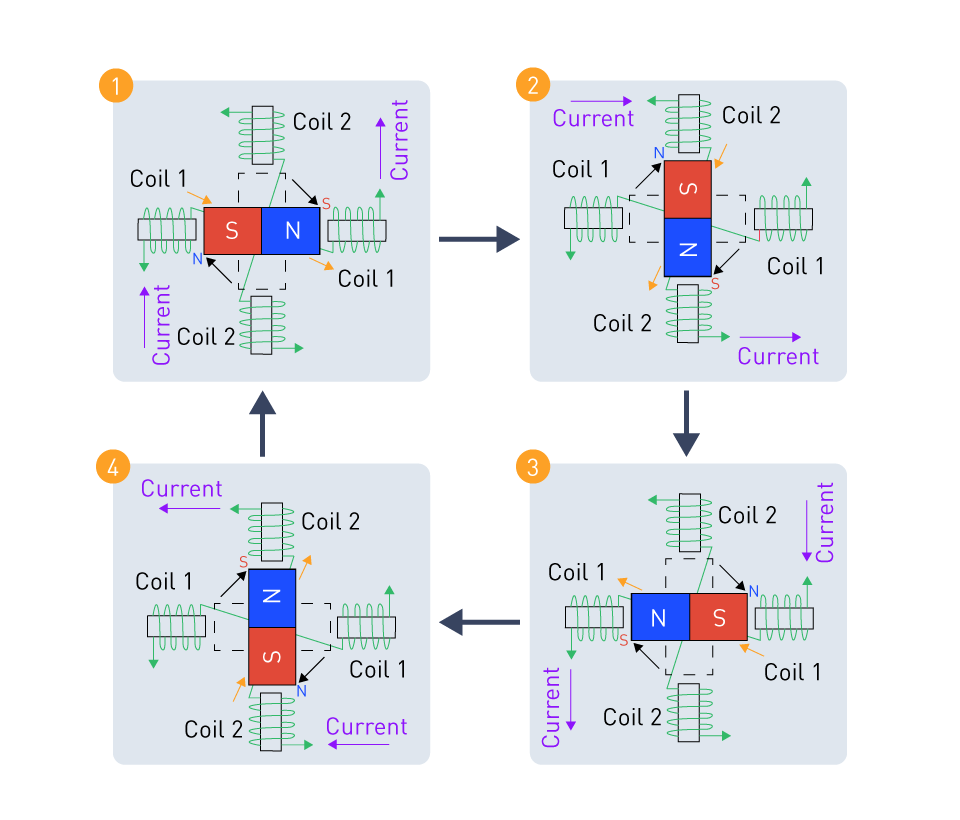
UNDERSTANDING STEPPER MOTORSMPSCHOLARThe capacity of stepper motors, which are a type of electric motor, to transform electrical pulses into discrete mechanical movements is one of their signature characteristics. Because of this property, stepper motors are an excellent option for applications that require regulated movement since they allow for precise control of the motor's position, speed, and acceleration. In contrast to convent...
-
MPSCHOLAR
STEPPER MOTORSMPSCHOLAR -
ARTICLE

DC MOTORS: OPERATING PHASES, FAULT DETECTION AND PROTECTION, AND DC MOTOR DRIVER APPLICATIONSARTICLEThis article provides an overview of direct current (DC) motors. In particular, it will describe the electrical parameters for DC motors operating under three different operating phases, abnormal operating conditions, and common applications for DC motors, including security cameras, electronic smart locks, and solenoid drivers. A DC motor is a device that converts electrical energy into mechan...
-
USE CASE

STEPPER MOTOR DRIVER USE CASE: MANUFACTURING AND INDUSTRIAL EQUIPMENTUSE CASEThis use case considers the application of the MP6602 in manufacturing and industrial equipment. The MP6602’s microstepping technique minimizes the impact of resonance by achieving higher resolution, damping effects, smoother current, and reduced vibration. The ability to drive motors with efficiency and precision is key in manufacturing and industrial equipment. Common applications for step...
-
ARTICLE
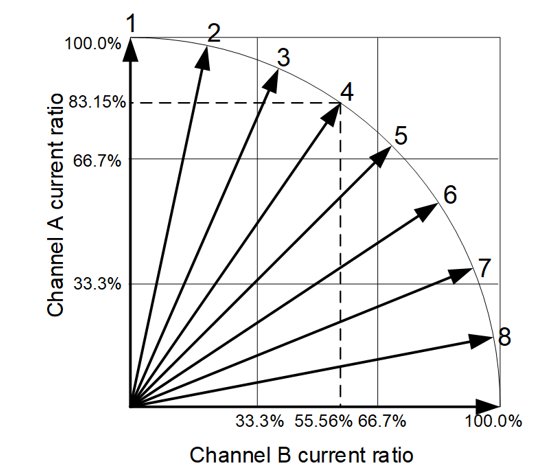
BIPOLAR STEPPER MOTORS (PART II): MICROSTEPPING AND DECAY MODESARTICLEIn Part I of this series, we covered the bipolar stepper motor’s three control modes as well as its mechanical structure, including dual full-bridge drive. In Part II, we will discuss microstepping and how it controls the dual full-bridge drive. Previously, half-step stepping mode was introduced as a combination of single-phase stepping and full-step stepping to obtain more electrical angle pos...
-
ARTICLE

BIPOLAR STEPPER MOTORS (PART I): CONTROL MODESARTICLEIn the intelligent era, stepper motors are widely used due to their unique open-loop position control performance. Each device has specific requirements that ensure there is a smooth output torque while the stepper motor rotates. Rotation stability is closely related to the motor’s physical construction as well as its control mode. This article introduces the bipolar stepper motor and discusses i...
-
ARTICLE
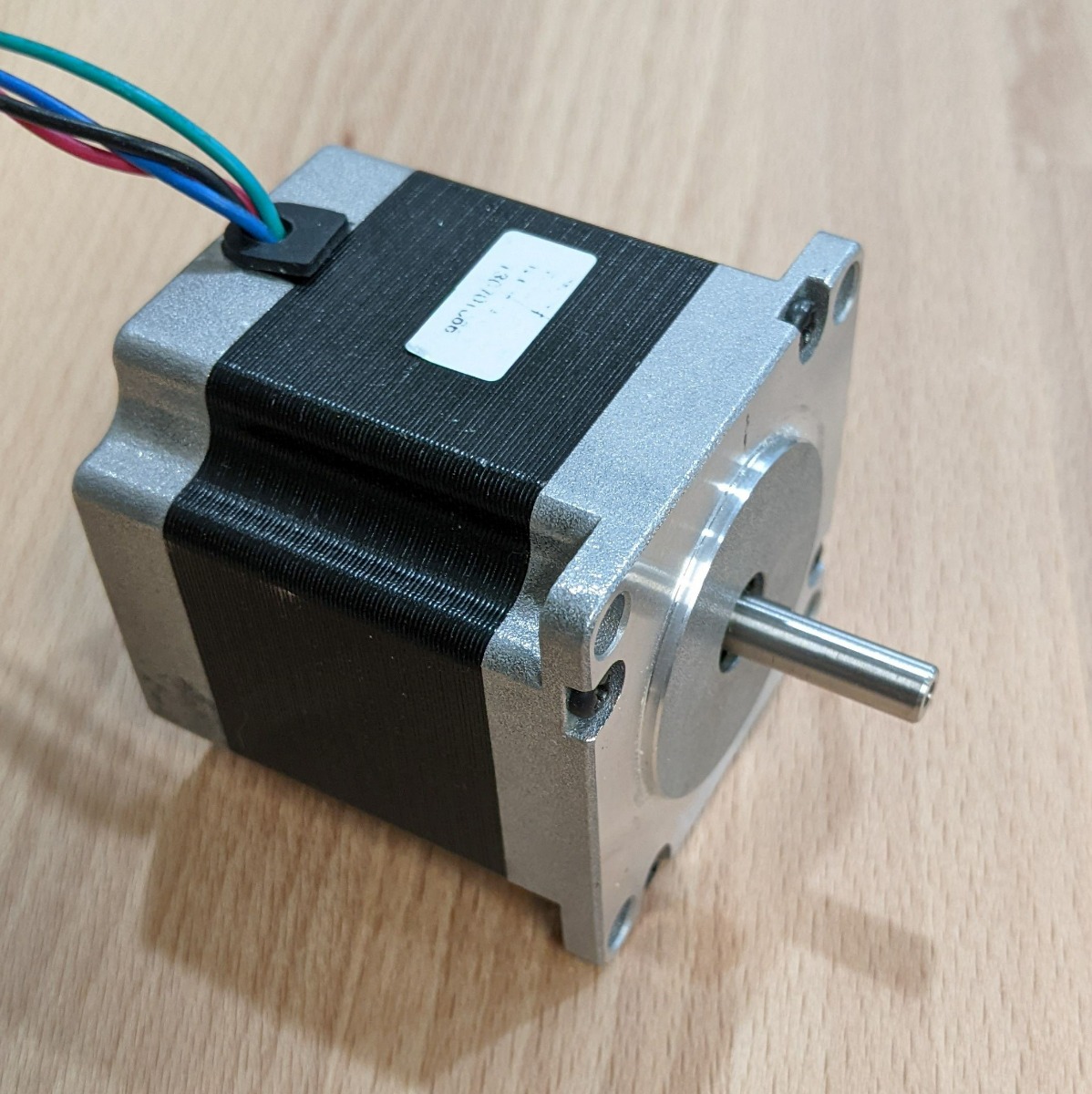
WHY MICROSTEPPING ISN'T AS GOOD AS YOU THINKARTICLEStepper motors are often used for positioning since they are cost-effective, easy to drive, and can be used in open-loop systems — meaning that they do not require position feedback like servo motors. Steppers are used in small industrial machines, such as laser engravers, 3D printers, and office equipment like laser printers. There is a wide array of options when it comes to stepper motors. For ...
-
ARTICLE
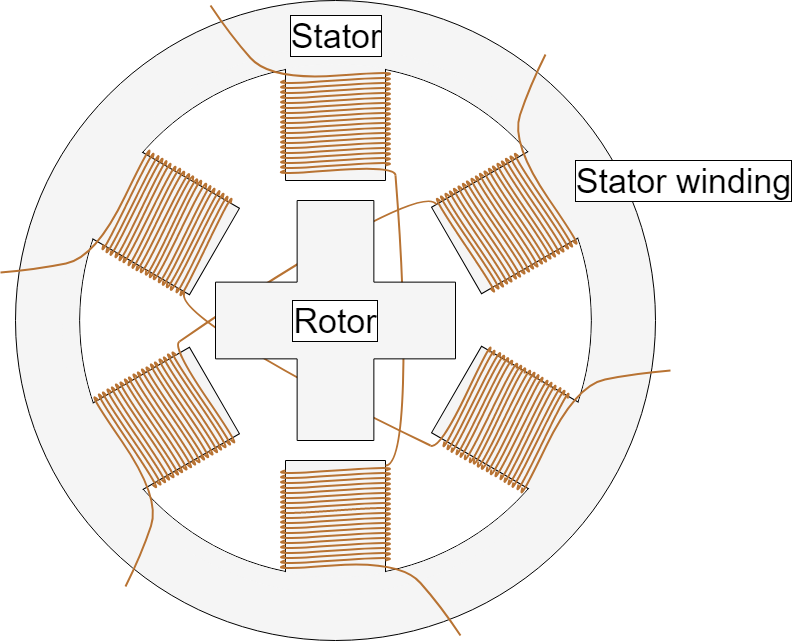
STEPPER MOTORS BASICS: TYPES, USES, AND WORKING PRINCIPLESARTICLEIn this article, we will cover the basics of stepper motors. You will learn about the working principles, construction, control methods, uses, and types of stepper motors, as well as its advantages and disadvantages. A stepper motor is an electric motor whose main feature is that its shaft rotates by performing steps, that is, by moving by a fixed amount of degrees. This feature is obtained tha...
Log in to your account
Create New Account