


The Power of Dual-Phase DrMOS Technology in AI Systems


Get valuable resources straight to your inbox - sent out once per month
We value your privacy
Background and Industry Evolution
As AI systems continue to push boundaries, current demands are rapidly increasing. Next-generation AI systems face a critical layout bottleneck caused by escalating current demands that now frequently reach the 1000A to 2000A threshold per socket.
To supply this immense demand for low-voltage power stably while minimizing ripple, voltage regulator module (VRM) architectures are forced to aggressively scale up their phase counts in order to distribute large currents across components to prevent overheating, reduce the output ripple, and improve transient response. This means that new VRMs often require 16, 24, or even more phases. This surging power requirement comes at a time when AI systems-on-chip (SoCs) and application-specific integrated circuits (ASICs) are expanding significantly, delivering higher computing density, but also consuming more board space while overall board size remains strictly fixed. This creates a critical physical squeeze, leaving power designers tasked with delivering vastly more current through a crowded network of phases within a restricted footprint.
Due to these demands, adopting high-density, space-saving components like dual-phase DrMOS is no longer just an optimization strategy — it’s become an absolute necessity to overcome space constraints and power tension.
Today’s DrMOS
DrMOS evolution has been driven by continuous need to maximize power density through packaging innovation. The technology reached a critical milestone in the 5mmx6mm era around 2017, where advanced silicon and thermal enhancements successfully pushed current from 70A to 90A within the same footprint. To further optimize space, the industry transitioned to the 4mmx6mm 90A generation in 2021 by shaving 1mm off the package width while maintaining the full 90A output. This has become the current mainstream standard for packing high-current phases closer to the CPU.
The latest processors demand unprecedented power, and future trends are rapidly shifting toward dual-phase integration, such as 5mmx5mm dual (60A + 60A) and 6mmx6mm dual (90A + 90A) — which compress two phases into a single package to maximize current density and save critical PCB space.
Key Advantages of Dual DrMOS
Dual DrMOS solutions provide three main advantages: higher power density, low input voltage options, and flexible package options.
Higher Power Density
Dual-phase DrMOS support unprecedented power density, which is critical for modern voltage regulator module designs in high-performance computing applications. They achieve this by delivering higher current output (90A per phase) within a constrained footprint, optimizing space efficiency compared to deploying two individual single-phase DrMOS components.
Utilizing dual DrMOS enables a higher degree of integration, effectively saving critical board space while maintaining high output power (POUT) for high-density designs. By integrating two phases into a single package, dual DrMOS significantly reduce overall component count and required PCB real estate, leading to a more compact, efficient layout (see Figure 1). This helps save cost and PCB space.
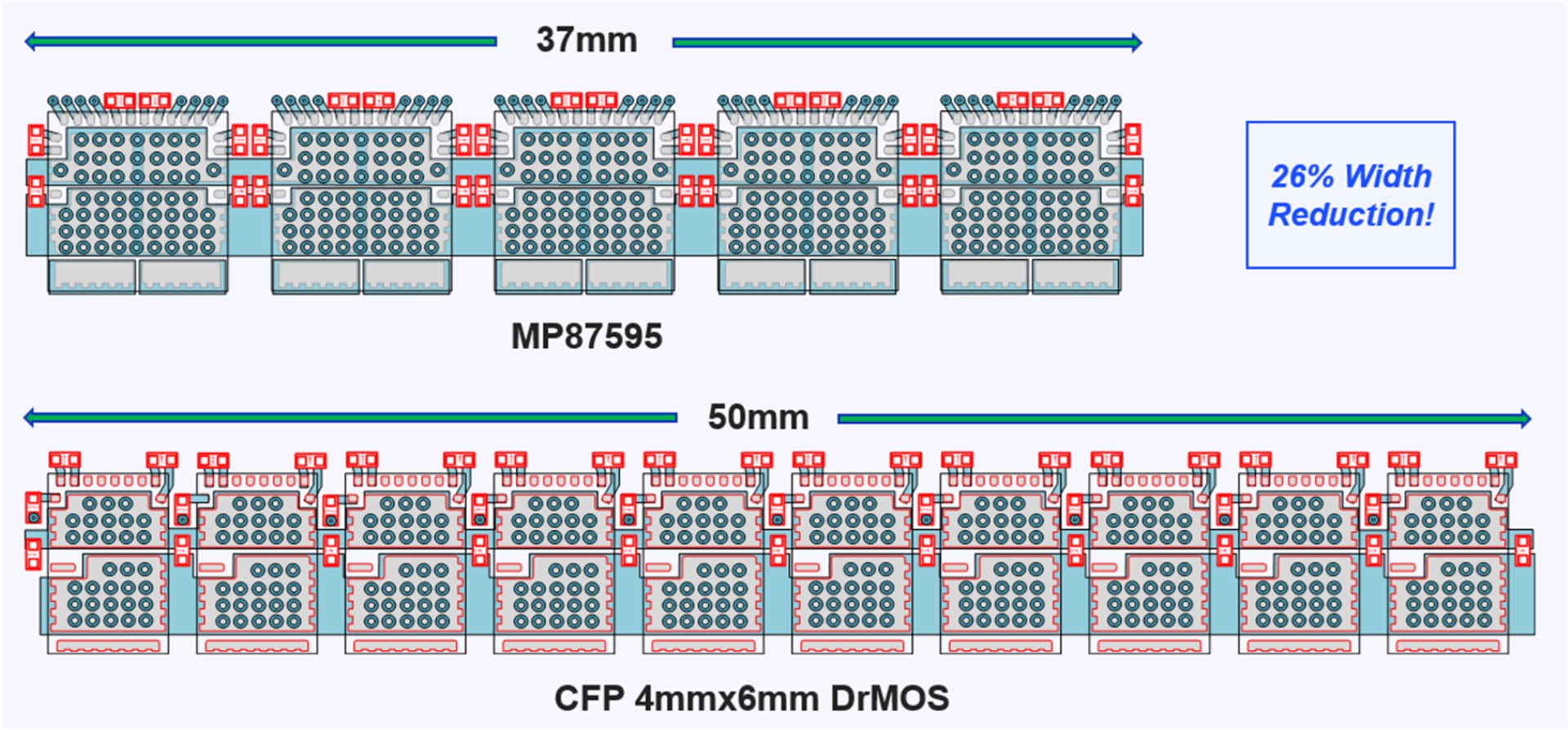
Figure 1: High Power Density in Compact PCB Space



16V and 8V Input Voltage Options
In addition to a standard 16V version (MP87595), we are excited to introduce a new low-voltage version. The MP87597 is an 8V dual-phase DrMOS that offers superior power conversion efficiency and significantly higher power density compared to a traditional 4mmx6mm DrMOS. Utilizing a lower input voltage significantly enhances power conversion efficiency by reducing switching losses and optimizing the duty cycle for low-voltage core rails.
Within the same 6mmx6mm package, MPS’s low-voltage process provides a specific on resistance (RDS(ON)), enabling the seamless integration of dual-phase functionality onto a single die without compromising efficiency.
Under the same test conditions, our solution demonstrates a 2% efficiency gain compared to traditional high-voltage process dual DrMOS (see Figure 2).
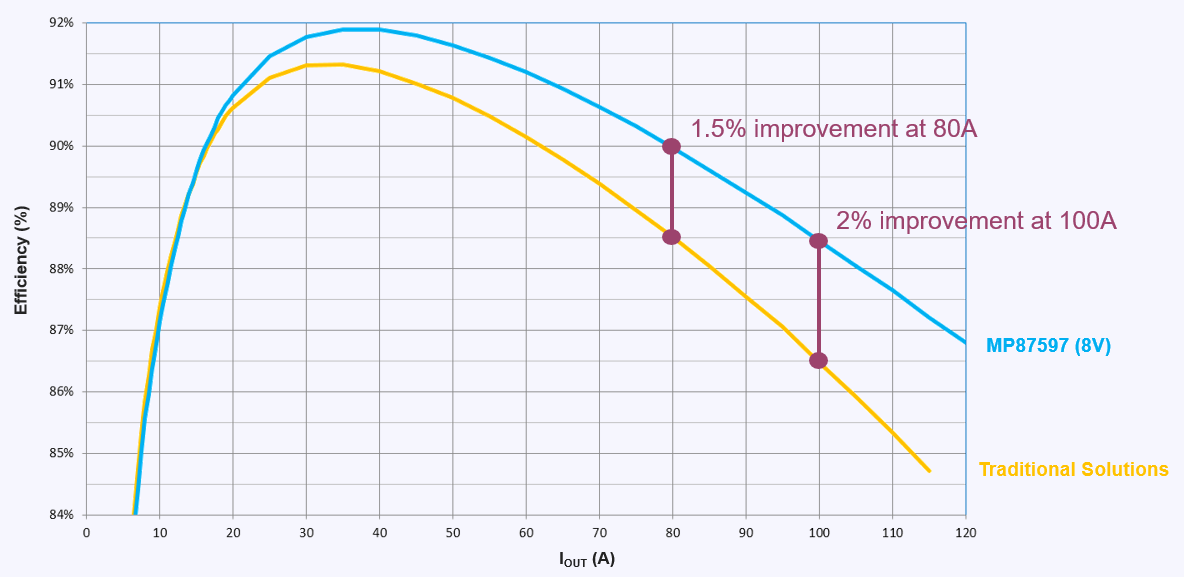
Figure 2: 16V vs. 8V Efficiency Comparison
Exposed Top and Standard Overmolding Package Options
Dual DrMOS solutions include both traditional overmolding package and exposed top package options (see Figure 3 and Figure 4).

Figure 3: Exposed Top Package Option

Figure 4: Overmolded Top Package Option
Exposed top package design significantly enhances thermal performance by providing a direct low thermal-resistance path from the silicon to the ambient environment or to an external heatsink. The exposed top allows for the attachment of a dedicated heatsink or thermal interface material directly on top of the DrMOS. Creating a secondary cooling path complements the traditional path through the PCB.
This structure allows heat to be dissipated more efficiently from the top of the component, preventing heat accumulation on the PCB and enabling higher power density in compact system designs.
MPS’s Dual DrMOS Family: MP87595 and MP87597
MPS’s growing DrMOS family includes the MP87595 and MP87597, both of which offer high-density power solutions that help overcome the space constraints faced by modern AI systems.
The MP87595 is a dual output Intelli-PhaseTM with a wide 3V to 16V input voltage (VIN) range. It can handle a maximum continuous current per phase of up to 90A, and features Accu-SenseTM current-sensing. It is available in an LGA-40 (6mmx6mm) package with an exposed top, which contributes to high thermal resistance (0.2°C/W for ΘJT and 0.8°C/W for ΘJB when exposed).
The MP87597 offers the same package size and key features with an even higher current capability, up to 100A and up to 8V VIN. Leveraging MPS’s low-voltage process, the MP87597 also achieves improved efficiency gain.
Conclusion
Dual-phase DrMOS technology offers the potential to overcome the power bottleneck and board size restrictions in AI systems by maximizing power density. Both the MP87595 and MP87597 provide the necessary advantages of dual DrMOS solutions that will enable the next generation of AI computing. To learn more, explore MPS’s robust Intelli-PhaseTM DrMOS solutions.
_______________________
Did you find this interesting? Get valuable resources straight to your inbox - sent out once per month!
Technical Forum
 Latest activity 21 hours ago
 10 Comments
Latest activity a day ago
2 Comments
Latest activity 2 days ago
2 Comments
10 Comments
Latest activity a day ago
2 Comments
Latest activity 2 days ago
2 Comments
Log in to your account
Create New Account