


PFC and Current Mode LLC Controller Use Case: Large-Screen TV Applications


Get valuable resources straight to your inbox - sent out once per month
We value your privacy
This use case examines the application of the HR1211 for large-screen TV applications.
The HR1211 is a multi-mode power factor correction (PFC) and current mode LLC combo controller that supports a PFC controller, flexible digital control, and rich protection functions.
Introduction
Large-screen TVs offer a heightened viewing experience with ultra-clear image quality and a stronger visual impact compared to small and medium-sized TVs, projectors, or mobile phones. Based on industry data, the U.S. market for large-screen displays is forecast to grow from $2.91 billion in 2020 to $8.45 billion by 2030, indicating the growing demand.
Design Challenges of Large-Screen TVs
As the demand for large-screen TV continues to surge, designers face three key challenges to meet the new standards, described below:
- Higher power consumption: Large-screen TVs consume power, even in standby mode. In general, a larger screen size results in a higher resolution and refresh rate, and a faster response speed leads to higher power supply requirements.
- Faster market iteration: The market demand for large-screen TV technology is changing rapidly, with the evolution across LED, OLED, mini LED, and microLED in the last two years alone. To quickly adapt to these innovations, engineers must constantly adjust the power architecture and indicators of the power supply, such as power, size, and performance. This has significantly lengthened the R&D cycle and increased the cost of the large-screen power supply.
- Higher power supply demand: Sudden display problems with the screen are typically attributed to the power supply. Therefore, the reliability of the power supply plays a vital role in the stable operation of large-screen TVs.
Introducing the HR1211
MPS offers the HR1211 to meet the power selection requirements of different large-screen TV applications. The HR1211 is a multi-mode power factor correction (PFC) and current mode LLC combo controller that supports a PFC controller, flexible digital control, and rich protection functions (see Figure 1).
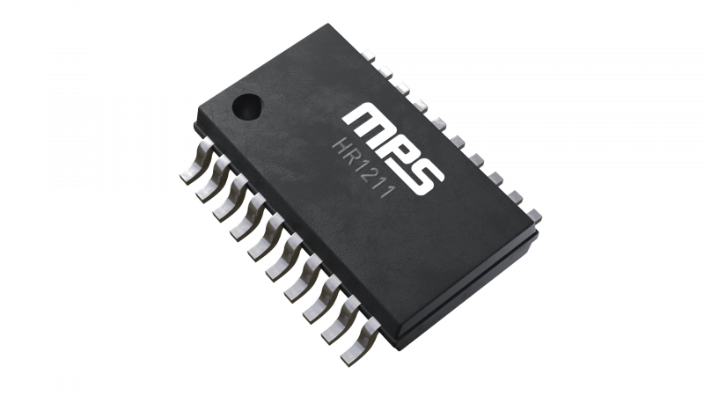
Figure 1: HR1211 PFC and Current Mode LLC Controller
PFC Controller
The HR1211 provides continuous conduction mode (CCM)/discontinuous conduction mode (DCM) multi-mode PFC control. In CCM, the device can achieve a continuous, high power output exceeding 300W; in DCM, it is also suitable for a small power output between 100W and 200W. Hybrid CCM/DCM operation significantly broadens the power supply selection range and can easily meet the various power requirements of large-screen TVs.
In addition, when large-screen applications are in standby mode, the HR1211 can maintain a low standby current, effectively reduce switching power loss and consumption, and achieve high efficiency under light-load conditions. This leads to energy conservation and reduced consumption for large-screen TVs.
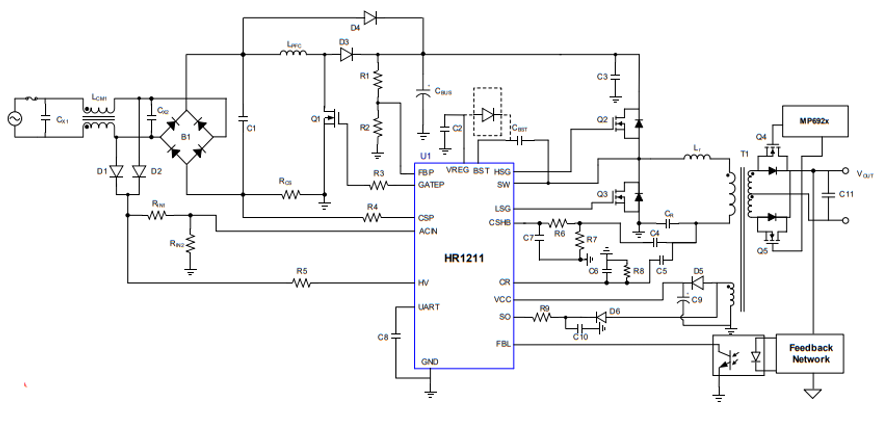
Figure 2 shows the typical application circuit of the HR1211.
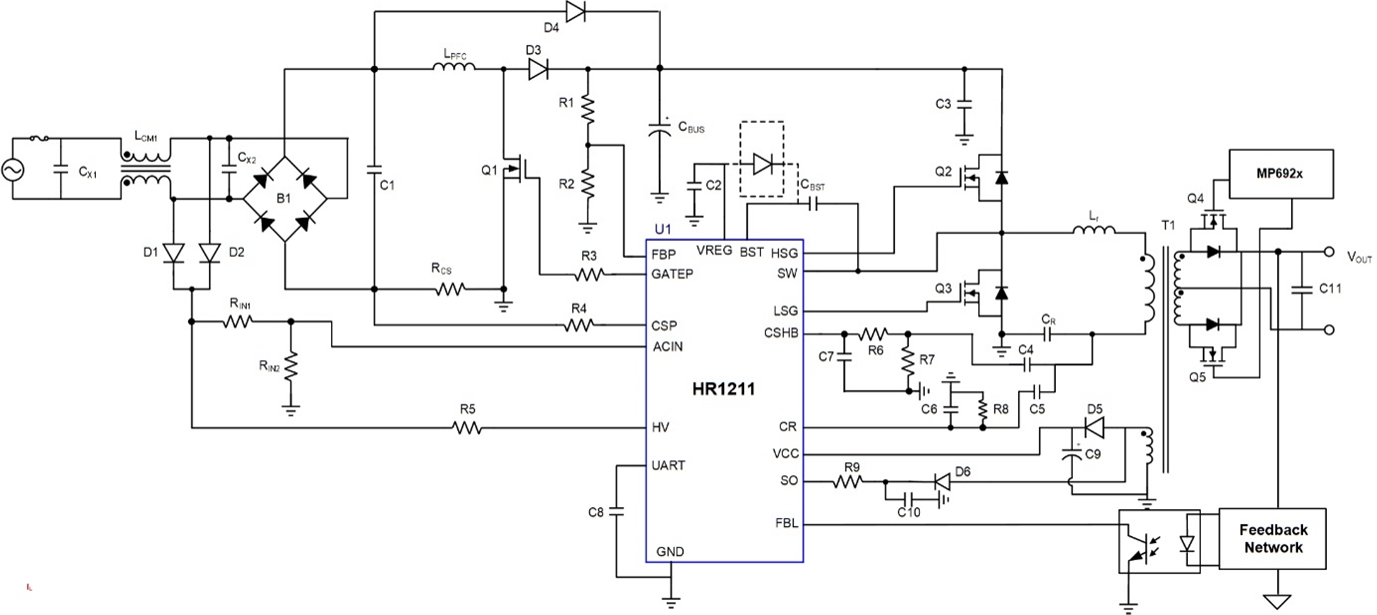
Figure 2: Typical Application Circuit of HR1211
Flexible Digital Control
When a new trend emerges in the large-screen TV market, the HR1211’s PFC and LLC controllers allow engineers to only adjust the graphical user interface (GUI) to meet the new design requirements without having to debug the hardware circuit. The main power chip remains unchanged. Figure 3 shows the dedicated GUI of the HR1211.
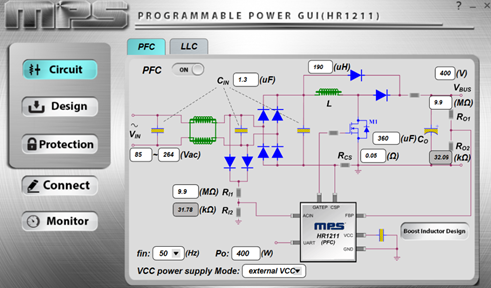
Figure 3: HR1211 GUI
Thus, the flexible digital control of the HR1211 accelerates the time to market for new large-screen products, significantly shortens the R&D process of power chips, and reduces the overall development costs for power supply solutions.
Robust Protections
The HR1211 provides a variety of protection functions, such as over-temperature (OT) shutdown protection, PFC open-loop protection (OLP), over-voltage protection (OVP), over-current limit (OCL) and LLC over-current protection (OCP), SO pin protection, and over-power protection (OPP). Multiple protections ensure a more stable screen power supply, which in turn reduces screen display and security issues caused by the power supply, and comprehensively safeguards large-screen applications.
Conclusion
The HR12xx series of PFC/LLC combo controllers, such as the HR1211, has been widely recognized in the industry for combining the advantages of analog chips such as rapid response with cutting-edge features like digital control flexibility. This use case examined the HR1211’s advantages for large-screen TV applications, including a wider power supply selection range, digital control flexibility to accelerate the product time to market, and robust protections for power supply stability. Additional features of the HR1211 include:
- Operates at Frequencies Up to 500kHz in Steady State
- Smart X-Capacitor Discharges during AC Dropout, Approved by IEC62368 and IEC60950
- Built-In, High-Voltage Start-Up and X-Capacitor Discharger
- Improved Skip Mode Control for LLC for Low Audible Noise
- Adaptive Dead-Time Adjustment (ADTA) for LLC
- Capacitive Mode Protection for LLC
- Configurable Soft Start (SS)
- <100mW No-Load Power Loss
- High Power Factor Due to Capacitor Current Compensation (>0.95 at 20% Loads)
- UART Interface and GUI to Configure Parameters
- Available in SOIC-20 and TSSOP-20 Packages
Related Content
-
VIDEO
Multi-Mode PFC and Current Mode LLC 2-in-1 Controller: HR1211
The HR1211 is a multi-mode PFC and current mode LLC 2-in-1 controller with full digital control via a UART interface.
-
ARTICLE
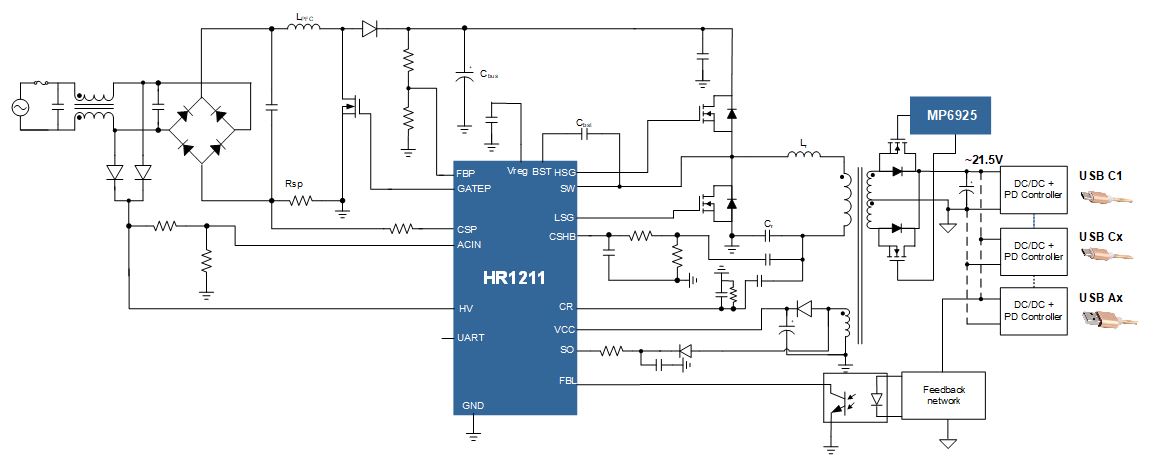
Developing a Multi-Port Fast-Charge Solution with the HR1211
This article covers the features of the popular HR1211, which offers flexibility, stability, and fast transient response.
-
VIDEO
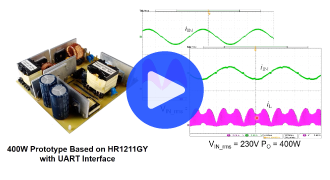
Feasibility and Accuracy Analysis of Input Power Estimation for Boost PFC Converter without Additional Sensor
This presentation discusses the feasibility of estimating real-time input power based on this limited information in a boost converter, using the HR1211 as an example.
-
ARTICLE
Digital PFC + LLC Combo Controller Helps Fast-Charge Adapters Enter the New Age
Fast-charge technology has developed rapidly in the last few years due to the exponential increase in power demand for mobile devices.
Log in to your account
Create New Account